

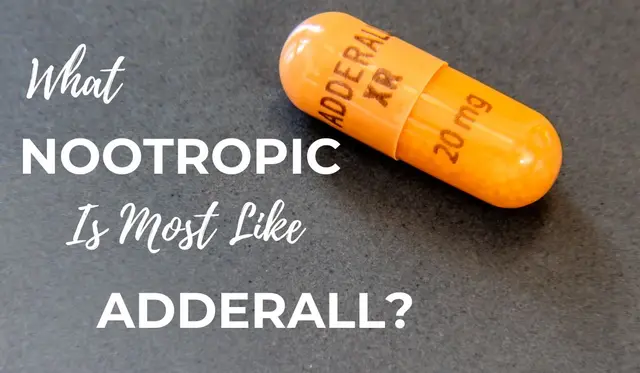
What Are Nootropics Made Of?
What are nootropics made of? This is a question that immediately pops into mind when someone mentions nootropics, often in reference to brain health and mental function.
We hear a lot about different products, including nootropics, because of marketing, but oftentimes, the actual ingredients are not exactly clear. We all want to know what we are putting in our bodies, so it only makes sense to ask this question of nootropics.
To answer this question, let’s first start with what nootropics are. Then, we will break down some of the things they can be made of.
What Are Nootropics?
Nootropics, sometimes called “smart drugs” or cognitive enhancers, are supplements or medications that are designed to improve brain function, improve cognitive performance, prevent cognitive impairment, slow brain aging, or treat symptoms of mental health disorders like attention deficit hyperactivity disorder (ADHD).
Of course, some of these nootropic supplements or prescription medications often hit on many of these functions.
The word “nootropic” used to have quite strict criteria of what was considered a nootropic; however, now the term is more widely used to describe any compounds that affect cognitive function as a whole.
Though you can really get into the nuances of what nootropics are, for now, just know they are essentially, at their core, molecules that have an effect on mental performance and brain function.
It is also important to note that nootropics can be used in both healthy individuals to enhance brain performance or optimize cognitive function as well as individuals with mild cognitive impairment to either prevent future cognitive decline, which can lead to things like Alzheimer’s Disease by protecting existing brain cells or improve their existing cognitive ability.
Which function and which population benefits from each nootropic depends on what it is made of, as each nootropic is designed for unique situations.
What Are Nootropics Made Of?
As we mentioned above, nootropics are usually dietary supplements, but what actually are nootropics made of? Well, that’s another complicated question because nootropics, especially the supplements you see on the market, can be made from so many things or be a combination of those many things.
Some of the most popular nootropic ingredients are caffeine, ginkgo biloba, L-theanine, creatine, and Panax ginseng. Even Omega-3 fatty acids are considered a nootropic. Though each of these is a naturally occurring nootropic molecule, there are prescription drugs that are considered nootropic ingredients as well.
For instance, modafinil and methylphenidate are prescription drugs that are considered nootropics. Each of these prescription nootropics is to create an alert mental state and boost brain performance in people with narcolepsy or ADHD.
You’ll need a prescription to get prescription nootropics, though there are many over-the-counter nootropics that have undergone randomized controlled trials and have good data to back up their claims.
Many of the over-the-counter nootropics combine multiple nootropics to create their products. This is called nootropic stacking. For example, ginseng and caffeine are frequently combined to boost brain function and improve mental focus.
Natural vs. Synthetic Nootropics
Though nootropics, or smart drugs, can be divided into several categories and then further broken down into subcategories, the two broadest ways to classify them are natural and synthetic.
As the name suggests, natural nootropics are those that are made from naturally occurring molecules. These are molecular structures found in things like plants and fungi that react with the brain to create their effect on cognitive function.
Scientific evidence and systematic reviews are always striving to continue establishing natural nootropics and their beneficial effects, especially in terms of neurodegenerative diseases, but so far, there are quite a few well-studied mental enhancers that are considered natural nootropics.
Synthetic nootropics, again, as the name suggests, are those that are lab-created. These are often modeled after various molecules that naturally occur in the brain or in nature itself. Synthetic compounds can be analogous to molecules like neurotransmitters or analogous to those natural molecules found in things like plants.
Prescription nootropics are almost always synthetic, but there are synthetic supplements that are over-the-counter as well.
FAQs
What is the main ingredient in nootropics?
Nootropics can have various main ingredients, though they all tend to be cholinergic, meaning that they are analogous to choline, a nutrient that is involved in the synthesis of the neurotransmitter acetylcholine as well as the structural component of the brain cell membranes, phosphatidylcholine.
What food ingredients are nootropics?
There are simply a ton of food ingredients that are nootropics. Some of these include blueberries, leafy greens, coffee, dark chocolate, tea, walnuts, salmon, eggs, and red wine.
Key Takeaways
- Nootropics can be a cognitive enhancer for healthy people as well as a means to manage symptoms for those with certain brain diseases like ADHD, narcolepsy, and even Alzheimer’s Disease.
- Dietary supplements like creatine supplementation and caffeine pills are well known, though many people don’t know they are considered nootropics and have cognitive effects.
- It is important to remember that you should always speak to a healthcare professional who is up to date with scientific references regarding nootropic supplementation before beginning a new routine.
- This is because some nootropics can be harmful to those with high blood pressure or other comorbidities.
References
Keep reading