




What Nootropic is Most Like Adderall?
As an Amazon Associate we earn from qualifying purchases. Product links on this page go to Amazon.
Adderall is one of the most commonly prescribed medications for ADHD, and it’s also a prescription medication that gets abused, leading to addiction. L-theanine is a nootropic that works much like Adderall and can produce similar results without the side effects. While Adderall works perfectly for some, you may have valid reasons for wanting to consider other alternatives for either yourself or someone you care for.
Nootropics, which are considered smart drugs for the brain, are supplements that can support cognitive health in a more natural, gentle way. We took to the task of finding the best nootropic alternative to Adderall. Here’s what we found.
What Is Prescription Adderall
According to the CDC, the number of children aged three to seventeen years that have ever been diagnosed with ADHD hovers at a number right around 6 million. Today, we’re also finding that it isn’t just children that are being diagnosed with ADHD.
We’re also seeing more adults being diagnosed, and we can assume that is in large part due to them educating themselves and recognizing the telltale signs of ADHD within themselves.
The medical community recognizes two main pathways of treatment for ADHD – behavior therapy and prescription medication. Medication falls into two categories – non-stimulants and stimulants, such as Adderall.
The stimulant category, by and large, works faster and more effectively to relieve ADHD symptoms, so when medication is sought, Adderall is often the first route taken.
Pro
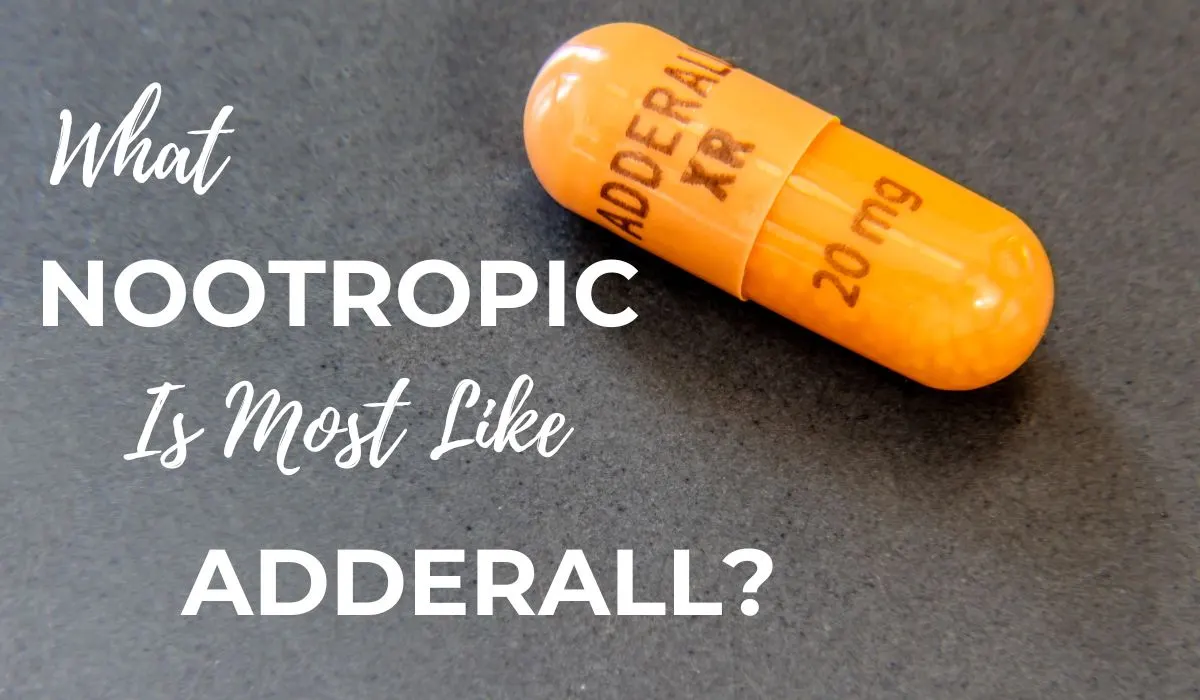
Adderall is a central nervous system stimulant that’s a combination of amphetamine and dextroamphetamine that’s intended to improve cognitive function, mental clarity, and focus in patients who take the prescription medication. Adderall is also sometimes prescribed to help relieve the effects of shift work sleep disorder.
Why Consider a Natural Adderall Alternative?
Adderall isn’t without side effects, but the choice to use it, whether for an ADHD diagnosis or other indication, is one that should be carefully considered between the patient and medical professional.
There’s plenty of scientific evidence that supports its use for the treatment of Attention Deficit Disorder, and when prescribed, it’s believed that the benefits outweigh the risks.
Even with that, some people are inclined to natural alternatives, either before trying a prescription medication or after deciding the side effects are interfering with their lives. However, whichever path you choose, please make sure to work with a medical professional, seeking out a natural health practitioner if that’s more aligned with your core values.
Adderall Side Effects
Side effects from Adderall range from mild to severe and may include:
- Nausea
- Digestive upset
- Stomach pain
- Headache
- Dry mouth
- Sleep disturbances
- Muscle weakness
- Mood swings
- Nervousness
- Panic attacks
- Sexual dysfunction
- Rapid heartbeat
- High blood pressure
- Kidney disease
- Seizures
- Cardiac side effects
Adderall Addiction
Adderall is a schedule II controlled substance that does have the potential to create a dependence on the drug and, as a result, can produce intense withdrawal symptoms when the medication is discontinued.
This, combined with Adderall’s list of potential side effects, has many people questioning whether or not the prescription of Adderall is the best option for either themselves or their children.
How Nootropics Help
Many people think of nootropics as just a typical supplement, which isn’t really the case. Nootropics are also called smart drugs, and they work through certain mechanisms that take place in the brain.
Nootropics don’t directly release neurotransmitters but instead alter the brain’s oxygen and glucose supplies, which do influence neurotransmitters. They have a protective effect on the brain and, as a result of this, boost cerebral blood flow, which can have tremendous cognitive benefits.
The right nootropic for ADHD can improve cognitive performance, including boosting mental energy, easing mental fatigue, improving focus and concentration, boosting physical energy levels, and providing many of the same benefits (although perhaps not as immediately or intensely) as Adderall – except without the serious side effects.
Best Nootropic Alternative for Adderall – L-Theanine
Of all the nootropics we’ve looked at, L-Theanine stands out as one of the best Adderall alternatives, both in how it works and the results it produces. L-Theanine is an amino acid that’s commonly found in green tea.
Research suggests that L-theanine, especially when combined with caffeine, works to improve memory and cognitive function, including mental alertness, mental performance, improve attention span, and memory retention.
MRI studies noted differences in alpha brain waves, indicating a cognitive enhancement in those who took L-theanine as compared to those who took a placebo.
It’s important to note that this particular study was small and included boys aged eight to fifteen years who had been diagnosed with ADHD. The positive result on brain function with L-Theanine alone was not as impressive, especially with inhibitory control. Likewise, caffeine on its own seemed to show a level of cognitive decline. But when combined, the effects were positive.
Another study showing that L-Theanine may be a good natural alternative to Adderall noted that L-Theanine showed positive results for improving attention, working memory, and executive function skills – except this time in middle-aged adults.
Other benefits of L-theanine include
- Anxiety and stress relief
- Improved mental focus
- Blood pressure management
- Immune system support
Nutricost L-Theanine 200mg, 120 Capsules
$11.95
View on Amazon: Nutricost L-Theanine 200mg, 120 CapsulesPrices as of Oct 31, 2026, 6:43 PM ET. Subject to change.
Side Effects of L-Theanine
L-Theanine is thought to be safe for most people and well-tolerated. However, the FDA does not regulate supplements, and there’s limited, if any, testing on many of them – L-Theanine not being an exception. What we do know about its safety comes from smaller studies and anecdotal evidence.
Some side effects people experience include upset stomach, nausea, and maybe a little irritability. These side effects often subside, but if they persist, it’s best to discontinue the supplement.
Since L-Theanine supplements are so often mixed with caffeine to boost focus and concentration, you might become jittery or anxious if you’re sensitive to caffeine.
If you’re looking for an Adderall alternative for your child, L-Theanine at lower doses is thought to be safe for children for a limited duration of time.
However, this depends highly on the age of the child and other medical details. Please, consult a physician before giving a child L-Theanine. You can always boost their intake naturally through tea and certain types of mushrooms.
More Best Natural Adderall Alternatives
L-Theanine isn’t the only nootropic that supports healthy brain function and offers other cognitive benefits. There are a number of other natural Adderall alternatives that are worth considering.
Caffeine
It doesn’t always make sense that stimulants work to control ADHD, but like Adderall, caffeine is a stimulant nootropic supplement that seems to have that same effect.
Brain cells in the ADHD brain react differently to stimulants, and caffeine is thought to help with memory recall, memory tasks, and energy levels.
Caffeine isn’t thought to be the most potent nootropic for ADHD, but it does appear to work better than a placebo when compared side by side.
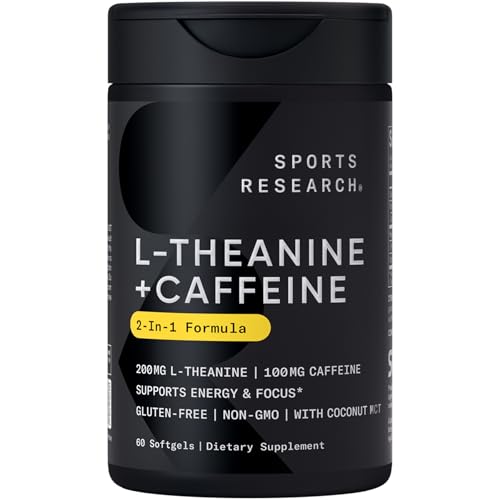
Sports Research L-Theanine + Caffeine, 60 Softgels
$22.95
View on Amazon: Sports Research L-Theanine + Caffeine, 60 SoftgelsPrices as of Oct 31, 2026, 6:43 PM ET. Subject to change.
Alpha GPC
Alpha GPC is thought to be a highly effective nootropic supplement and one of the leading alternatives to Adderall.
You’ll often find this nootropic added to stacks that support cognitive function and mental health. Alpha GPC is also thought to help reduce anxiety, which is a frequent co-existing mental health condition with ADHD.
Prices as of Oct 31, 2026, 6:43 PM ET. Subject to change.
L-Tyrosine
L-Tyrosine is an amino acid that’s also a precursor for the production of neurotransmitters norepinephrine and dopamine. These are also two of the neurotransmitters that Adderall targets.
L-Tyrosine is found naturally in a variety of foods, including eggs, meat, fish, milk, tofu, beans, and seeds. You can also purchase it in supplement form.
However, the jury is still out on how well L–Tyrosine stands up on its own as a nootropic for ADHD. It seems to be more effective when combined into a nootropic stack.
Prices as of Oct 31, 2026, 6:43 PM ET. Subject to change.
Huperzine – A
Huperzine-A increases levels of acetylcholine in the brain. Acetylcholine is a chemical that’s widely used in Chinese medicine and is thought to improve not only the symptoms of ADHD but also depression and certain types of dementia.
Prices as of Oct 31, 2026, 6:43 PM ET. Subject to change.
Nootropic Stacks for Adderall
Nootropic stacks are formulas that feature several types of nootropic supplements that are designed to support brain health and function. Several great ones have been designed specifically for ADHD and similar conditions.
You might find the nootropics listed above on the ingredients label, along with other potent nootropics, including Bacopa Monnieri, Maritime Pine Bark Extract, and Ginkgo Biloba.
The market for these nootropic stacks seems to frequently shift, and the formula that’s popular and thought of as the best today will likely be different in the near future. However, there are a couple of nootropic stacks for ADHD that we feel comfortable recommending.
The first is NooCube, which contains Bacopa Monnieri, Alpha GPC, L-Theanine, L-Tyrosine, Cat’s Claw, Oat Straw, Resveratrol, and several B vitamins.
Another is Vyvamind, which is thought to be the closest thing to Adderall in the world of nootropics. It contains L-Tyrosine, Citicoline, L-Theanine, Caffeine, and B vitamins.
What to Consider
Unlike Adderall, nootropics can potentially improve cognitive performance and focus without a long list of side effects. However, natural nootropics don’t work for everybody, and some people truly need a medication like Adderall to work with their brain chemistry. Adderall should not be stopped cold turkey without the guidance of a medical professional.
For the most part, the nootropics on this list have had limited clinical trials that have largely included adult participants. There’s limited research to look at that actually includes studies with children. Just because a supplement is all-natural doesn’t mean that it’s completely safe, especially for kids.
Before giving a child an Adderall substitute, make sure you’ve done the research and have some medical guidance to back you up. It’s also not a good idea to give a child a potent nootropic for extended periods of time.
FAQs
What is the closest supplement to Adderall?
There are a number of dietary supplements that are designed to have a similar effect as Adderall on the human brain. These nootropic supplements are typically offered as “stacks” or formulas that are especially created to support brain pathways. Some popular supplements in this category include NooCube, Vyvamind, Nooceptin, and Mind Lab Pro.
Key Takeaways
- L-Theanine is the best Adderall alternative but works best when partnered with caffeine
- Nootropics can improve brain health, increase brain blood flow and work to ease the symptoms of ADHD
- Nootropics aren’t free of side effects – just because it’s natural doesn’t mean it’s a perfect fit for you
- Please work with a medical professional before giving a child a nootropic for Attention Deficit Disorder
- Don’t stop taking Adderall cold turkey, as withdrawal symptoms may occur
- Look at the clinical evidence yourself before deciding on a nootropic for ADHD
Sources
- https://www.cdc.gov/ncbddd/adhd/state-data-hub.html
- https://www.cdc.gov/ncbddd/adhd/treatment.html
- https://www.accessdata.fda.gov/drugsatfda_docs/label/2007/011522s040lbl.pdf
- https://americanaddictioncenters.org/adderall/side-effects
- https://www.ncbi.nlm.nih.gov/pmc/articles/PMC9415189/
- https://www.ncbi.nlm.nih.gov/pmc/articles/PMC7403383/
- https://www.ncbi.nlm.nih.gov/pmc/articles/PMC8080935/
- https://www.ncbi.nlm.nih.gov/pmc/articles/PMC8850715/
Keep reading